


Lasting neighborhood transformation begins with people, not programs.
It starts with listening, learning, and walking alongside neighbors to understand what is already strong and where new opportunities can take root.
That belief is at the heart of Neighboring Well.
Neighboring Well is a faith- and place-based cohort through FCS designed to strengthen the capacity of local churches and community anchor organizations to engage meaningfully in the life of their neighborhoods. Through a shared learning journey, participants are equipped with the tools, relationships, and practices needed to move beyond isolated efforts and toward coordinated, community-informed action.
But Neighboring Well is more than a program; it’s a process.
What makes it distinctive is its commitment to an adaptive, relational approach. Participants journey through five phases—Assemble, Assess, Align, Activate, and Abide—each building on the last. This structure creates space for trust to form, for understanding to deepen, and for strategies to emerge that are rooted in the real, lived experiences of residents.
Rather than starting with solutions, Neighboring Well begins with listening.
Listening First: Inside Phase 02 – Assess
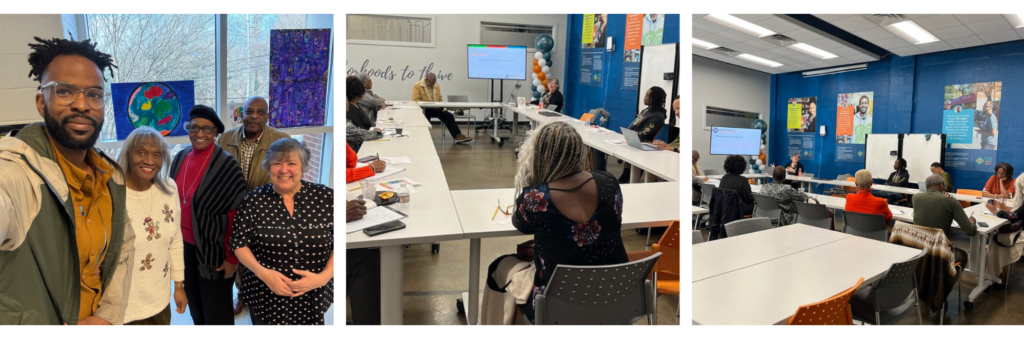
Right now, the cohort is in Phase 02: Assess. During this phase, participants are engaging in a comprehensive community assessment process that brings together multiple layers of understanding the neighborhood.
They are listening to residents through conversations and surveys, identifying local assets and support systems, exploring the history and story of the community, and examining data that reveals patterns and trends.
But this isn’t just about collecting information.
It’s about shifting posture.
It’s about learning with residents, not about them.
As one participant shared,
“I am learning communication skills don’t always begin with a verbal conversation but rather an internalized intention that creates space for new perspectives.” — Brittany Raymond
This phase invites participants to slow down, to notice, and to engage with humility—recognizing that meaningful change begins by honoring the voices and experiences already present in the community.
As participants gather insights, they are also uncovering something deeper—how systems shape opportunity, how informal networks sustain resilience, and how community strengths often go unrecognized.
For many, this process is both eye-opening and deeply personal.
“The cohort is helping me see how systems, access, and lived experiences shape community engagement. It’s not just about individuals, it’s about the environments people are navigating and the support available to them.” — Linda Tatum
This growing awareness is moving the cohort beyond assumptions and toward a more complete, honest, and hopeful picture of the neighborhood.
At the same time, it is strengthening a shared commitment to show up differently.
“Seeing how systems continue to fail those of our communities that need help the most gives me the energy to keep showing up. I am excited to be a part of this movement.” — Brittany Raymond
Seeing the Full Picture
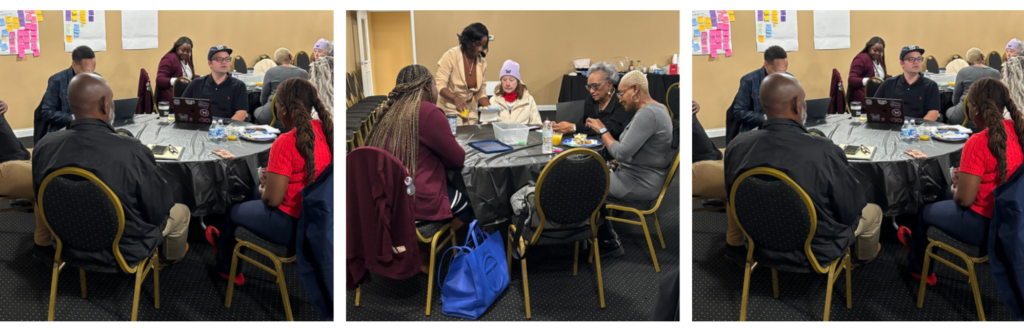
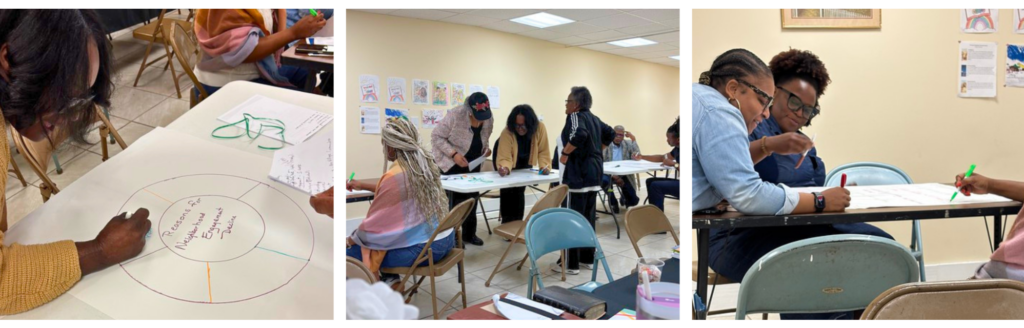
During a recent workshop, the cohort was using a series of “why” questions to explore the root causes of declining social cohesion in Historic South Atlanta and Thomasville Heights.
As participants named contributing factors—place-based trauma, transiency, economic pressures, and the structure of the community—the conversation began to surface both challenges and complexity.
The room fell silent when a neighbor, who also serves as a South Atlanta Civic League representative and local church member, offered a question that shifted the conversation:
“Why has the church remained within its four walls, creating a need for Focused Community Strategies and the Neighboring Well initiative?”
It wasn’t a question meant to assign blame. It was an invitation to reflect more honestly.
It challenged the cohort to look inward as much as outward, considering not only the neighborhood’s conditions but also the posture of the institutions called to serve it.
In that moment, something shifted.
The Assess Phase became more than an exercise in understanding community dynamics. It became an opportunity to examine assumptions, confront hard truths, and reimagine what it means to lead with a faithful, present, and engaged posture.
As the cohort moves forward, this question will remain central. It will serve as a compass, guiding the work toward deeper alignment, shared responsibility, and a renewed commitment to showing up beyond the walls in pursuit of shalom.
Rooted in Faith, Lived in Community
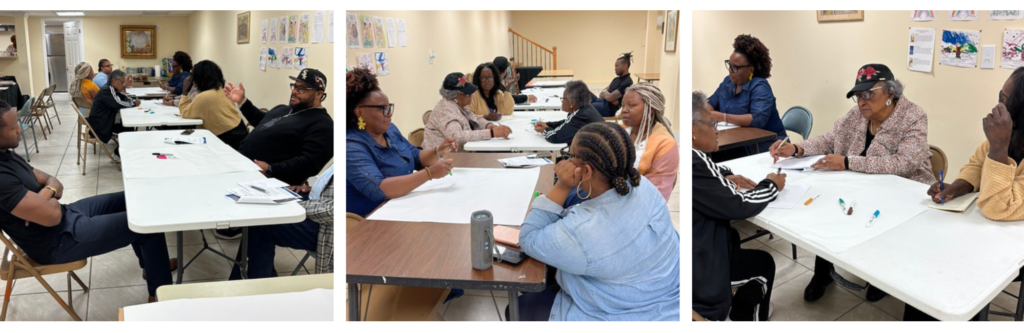
At its core, Neighboring Well is grounded in a vision of community shaped by faith, compassion, and connection.
“Relating to our neighbors from a God-centered perspective allows us to leave our differences at the door so that we can relate to each other with compassion.” — Brittany Raymond
Participants are learning new tools as they embrace a deeper calling to live out their faith through presence, hospitality, and relationship.
“Radical acts of hospitality and fellowship will always be the fabric that holds our communities together, today and for the future.” — Deacon Joseph Pettigrew II
For many, this work is both transformational and restorative.
“The most challenging thing is finally being able to unpack my own place-based trauma and help my family change the trajectory for the next generation.” — Deacon Joseph Pettigrew II
And yet, it is precisely this kind of honest, relational work that creates the conditions for lasting change.
A Movement Toward Hope and Healing
In a time when many communities are navigating uncertainty and division, Neighboring Well offers a different path—one rooted in hope, unity, and shared responsibility.
“We’re learning how to help our neighbors move from surviving to thriving, so that they can continue to reach others, promoting a healthy inclusivity. Who doesn’t need a message of hope in the midst of national turmoil?” — Elder Tonetta Collins
This work is not about quick fixes. It is about cultivating the kind of community where people are seen, supported, and connected.
“God never designed strength to be carried in isolation. Community is where isolation loses its power because no one is left to fight life alone. Community is His strategy for sustainability.” — Dr. Michael A. Chambers

Meet the Cohort
This work is being carried forward by a diverse group of churches, nonprofits, civic organizations, and partners committed to the well-being of their neighborhoods:
- Mount Carmel AME Church
- First Deliverance Church of Atlanta
- Bible Way Ministries International
- Mount Pleasant Baptist Church
- Saint Paul AME Church
- Refuge Church
- City of Atlanta (Neighborhood Reinvestment Initiative)
- Historic South Atlanta Civic League
- Thomasville Heights Civic League
- Atlanta Inner City Mission
- Be Well, Black Girl Initiative
- Summerset Ventures, LLC
Together, they are learning, listening, and building relationships that will shape the future of their communities.

Looking Ahead
The work happening in this phase is laying the foundation for what comes next. As Neighboring Well moves into future phases, these insights will guide alignment, inform action, and shape initiatives that are not only responsive but sustainable.
Because when neighbors are heard, when relationships are strong, and when efforts are aligned, real change becomes possible.


