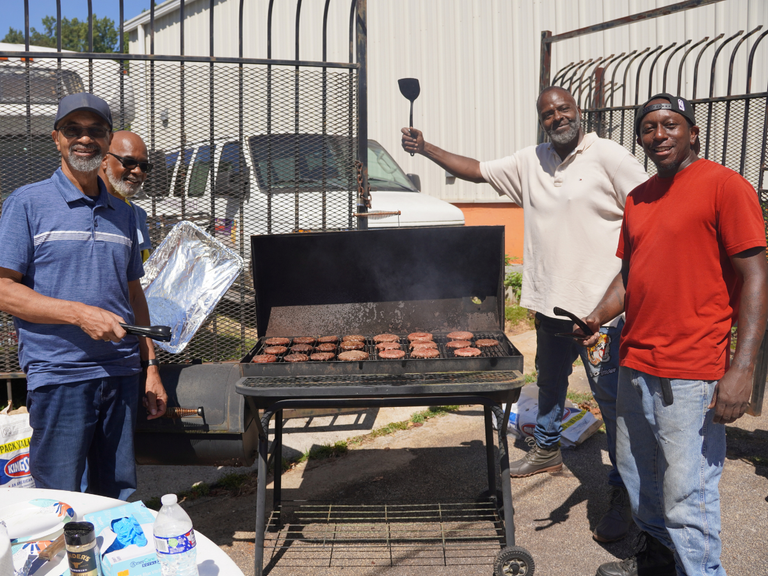
Five churches. 14.2 acres of unused property. And a growing vision for what’s possible when churches and neighbors work together.
Sometimes, the greatest opportunities for neighborhood transformation are already right in front of us. We just need to see them differently.
That’s what participants in FCS’s Neighboring Well initiative are discovering as they complete an important milestone in their year-long journey: asset mapping.
Through this process, five churches in Historic South Atlanta and Thomasville Heights identified a combined 14.2 acres of unused, church-owned property. But the discoveries extend far beyond land and buildings. Participants are uncovering talents within their congregations, strengthening relationships with community leaders, and exploring new ways to put existing resources to work alongside their neighbors.
And already, those discoveries are sparking exciting possibilities.
Looking Beyond What’s Missing
Churches have long been important anchors in their neighborhoods, offering spaces for gathering, connection, and community support. But what happens when they take a fresh look at the resources they have and the relationships they could strengthen?
Through Neighboring Well, FCS is helping local faith leaders explore those questions alongside neighbors and community partners. The free, one-year initiative encourages participants to build on existing strengths and develop collaborative approaches to lasting neighborhood change.
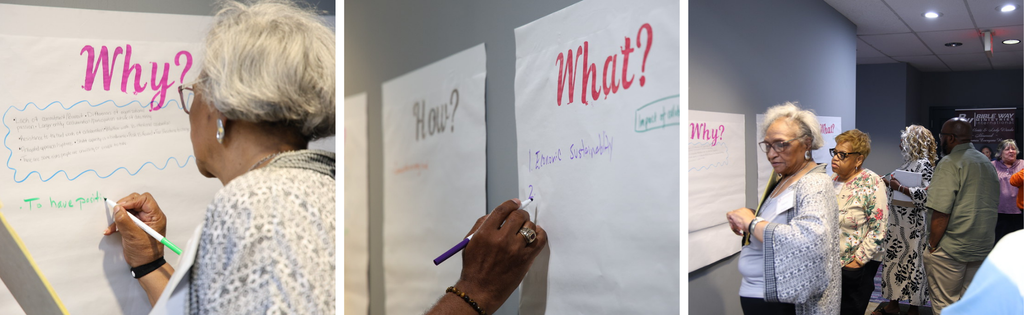
The program guides participants through five phases—Assemble, Assess, Align, Activate, and Abide—moving from relationship-building and listening to shared priorities, collaborative action, and sustained engagement.
Asset mapping is a key part of the Assess phase.
Rather than focusing exclusively on challenges or unmet needs, participants take inventory of the resources already present in their neighborhoods. That includes physical spaces, individual talents, organizational strengths, and existing community relationships.
The goal isn’t simply to create a list of assets. It’s to help participants see how those resources might be connected and used in ways that reflect neighbors’ priorities.
For some churches, that process is opening doors they hadn’t previously considered.
From Unused Space to New Opportunities
One of the most significant findings from the asset-mapping process was the amount of church-owned property that could potentially support new neighborhood initiatives. Across five participating churches, the cohort identified 14.2 acres of unused property.
And conversations about how to use those spaces are already underway.
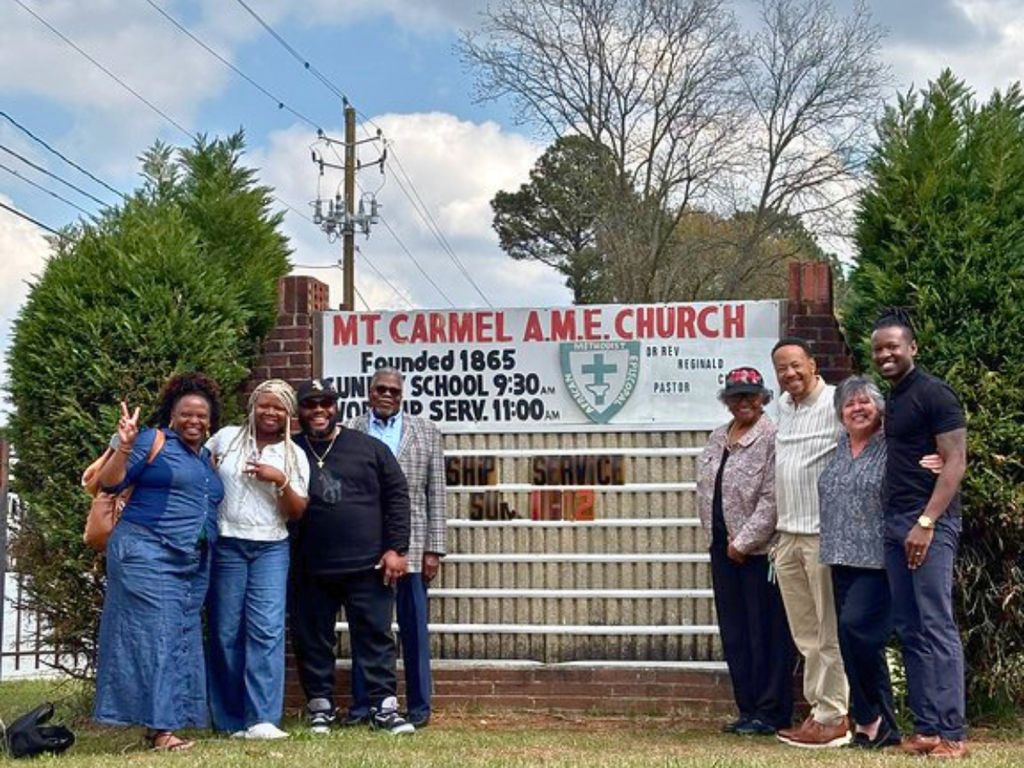
One participating church is exploring the possibility of converting a substantial portion of its existing space into a community center, creating new opportunities for neighbors to gather, connect, and access resources. In Thomasville Heights, Mount Carmel AME Church is exploring an early learning center that would serve younger siblings of children attending the elementary school across the street.
These ideas are still taking shape, but they demonstrate what can happen when organizations begin viewing their existing resources through the lens of neighborhood opportunity. Instead of asking only what new programs they could create, churches are beginning to ask a different question: How can what we already have contribute to what our neighbors want for their community?
Discovering the Power of Relationships
While the physical assets have generated exciting possibilities, some of the most meaningful discoveries have been less tangible. According to Stacy Brungardt, FCS’s Manager of Faith-Based Integration, the assessment process has encouraged churches to take a closer look at their relationships within the neighborhoods they serve.
For some participants, that has meant recognizing a distinction between providing services to residents and building meaningful, ongoing relationships with them. A church might regularly distribute food or organize community events, for example, without necessarily knowing the neighbors who participate, understanding their aspirations, or having opportunities to collaborate with them.
Neighboring Well creates space for churches to explore that distinction together.
It also encourages participants to engage with existing neighborhood leadership. Civic leagues, local organizations, and residents bring valuable knowledge about neighborhood priorities, challenges, and opportunities. By connecting with these groups, churches can deepen their understanding of the community and identify opportunities to work together rather than launching efforts independently.
The process is also helping congregations recognize the wealth of skills and talents among their own members. From professional expertise to personal experiences and community connections, these gifts represent another important layer of neighborhood assets.
When combined with the knowledge and leadership of residents, they create new possibilities for collaboration.
Building Something That Lasts
One of the most encouraging developments from the 2026 cohort is a shared desire to continue working together beyond the year-long experience. Participants have begun developing the Neighboring Well Collective, a network of faith-based leaders committed to maintaining relationships, sharing knowledge, and exploring opportunities for continued collaboration.
It’s an important reflection of what makes Neighboring Well different. The initiative isn’t designed to produce a single project or short-term service opportunity. Its purpose is to strengthen the relationships and practices that make sustained, community-informed action possible.
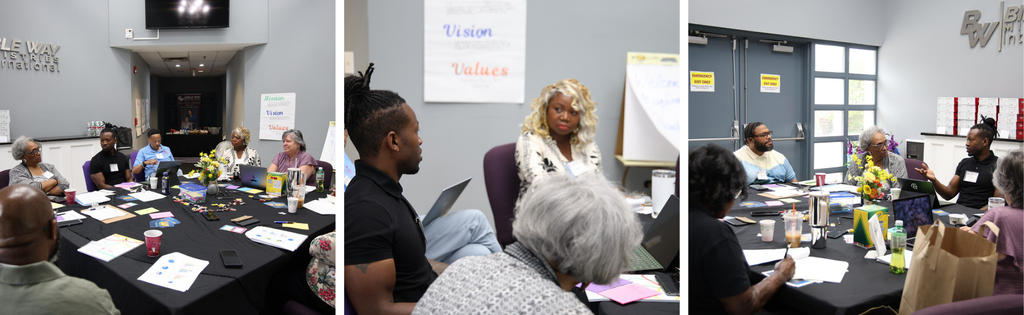
Throughout the year, participants engage in facilitated workshops, monthly meetings, practical learning experiences, and individualized coaching. They also work toward collaborative projects shaped by neighborhood priorities.
The asset-mapping process provides an important foundation for that work. By identifying what already exists, participants can begin exploring how their resources complement one another, where partnerships could be strengthened, and how collective efforts might create a greater impact.
For FCS, it’s another expression of a long-held belief: neighborhood flourishing happens through relationships, shared ownership, and the leadership of neighbors themselves.
More Churches. More Connections. More Opportunities to Neighbor Well.
The momentum from the 2026 cohort is helping pave the way for an exciting next chapter.
In 2027, FCS is expanding Neighboring Well to welcome more churches across Southeast Atlanta!
After bringing together churches and community partners in Historic South Atlanta and Thomasville Heights, the next cohort will invite additional faith leaders to take part in this free, one-year learning experience.
Participants will gain practical tools to better understand their neighborhoods, identify local strengths, build meaningful partnerships, and work alongside neighbors toward lasting change. They’ll also join a growing network of leaders committed to moving beyond the walls of their churches and becoming more deeply connected to the communities around them.
Could your church be part of what’s next?
Early registration for the 2027 Neighboring Well Cohort is now open, and space is limited.
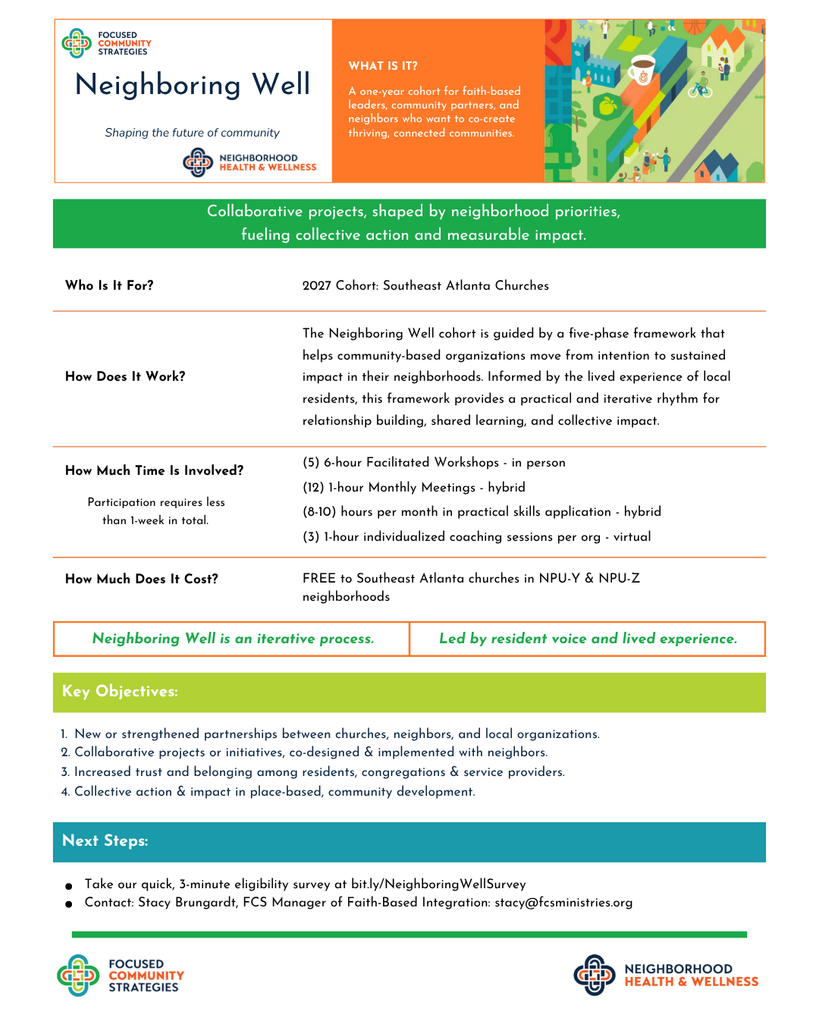
Church leaders across Southeast Atlanta are invited to complete a quick, three-minute eligibility survey to express their interest.
Sometimes, the first step toward lasting change isn’t creating something new. It’s discovering what’s already possible when we neighbor well.