


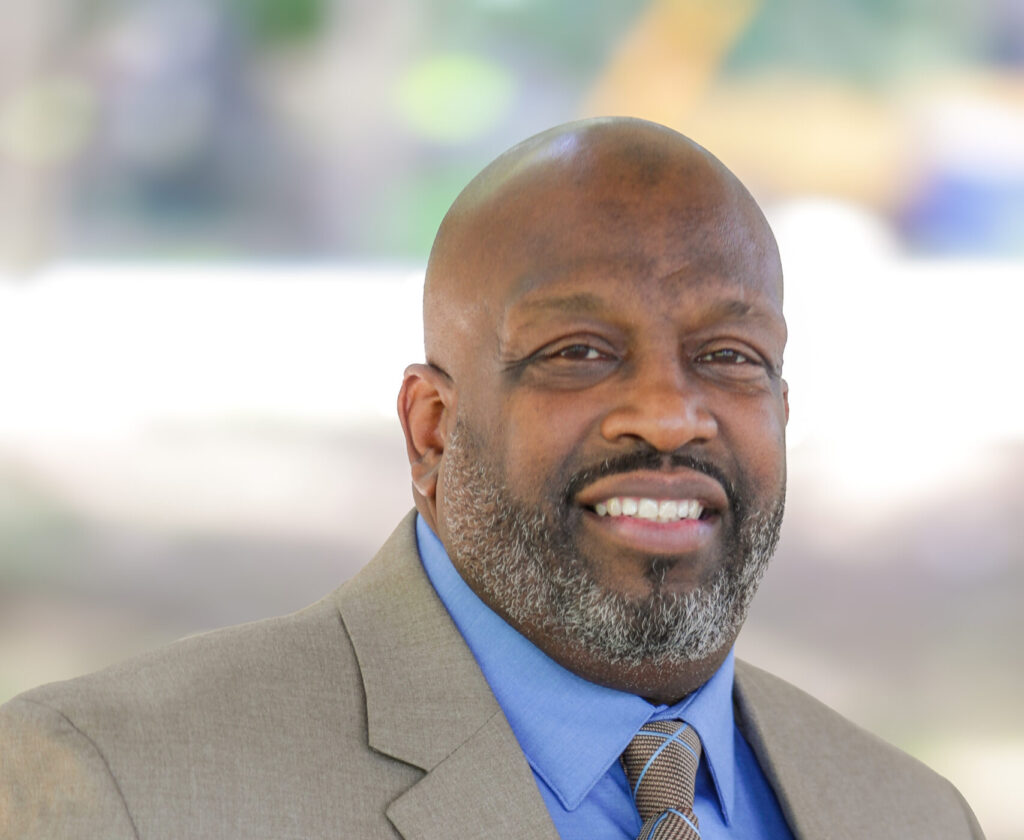
By Marvin Nesbitt,
President of Focused Community Strategies
Recently, I had the opportunity to speak at Mount Pleasant Baptist Church about community development and the importance of showing up for the places we call home. As I reflected on that conversation afterward, I realized the message extended far beyond the walls of the church.
At a time when communities across the country are wrestling with displacement, belonging, representation, and economic opportunity, I believe one question deserves our attention: What does it take for a neighborhood to truly flourish?
In an era focused on policy, investment, and development, the most powerful force for community transformation may still be presence. In order for our neighborhoods to flourish, families to thrive, children to walk down safe streets to world-class schools, and legacy residents to build real wealth, all of us must be intentionally present in the work of community transformation.
The question before us is not whether people care about their communities. History has already answered that question. The question is whether this moment in Atlanta’s history calls for an even deeper level of presence, leadership, and engagement.
I believe it does.
A Tale of Two Atlantas
To understand why, we have to look honestly at the city we call home.
Atlanta is often celebrated as a beacon of Black excellence and opportunity. In many ways, those accolades are deserved. But beneath the headlines and cranes dotting our skyline lies a more complicated reality.
That reality has been described as the “Tale of Two Atlantas” by Courtney English—a city where prosperity and hardship often exist just miles apart.
Atlanta is the cradle of the Civil Rights Movement, the cultural capital of Black America, and a city driving billions of dollars in economic activity. Yet, alongside that success story is another reality that many residents experience every day.
We live in a city divided by a stark economic chasm. On one side is unprecedented growth, soaring property values, and a booming corporate and technology ecosystem. On the other, particularly across many South and Westside neighborhoods, residents continue to face the compounding effects of decades of systemic disinvestment.
The disparities are difficult to ignore. Housing stability, educational attainment, food access, and economic mobility often vary dramatically depending on where someone lives. In some cases, a child’s ZIP code can influence life expectancy by more than twenty years.

That is not an accident of geography. It is the lingering footprint of historic neglect.
And it raises an important question: If new investment is finally arriving, what will it take to ensure that long-time residents are able to share in the prosperity that follows?
Legacy Residents and the Limits of Policy
The urgency of this moment is shaping policy decisions across Atlanta today.
Mayor Andre Dickens recently introduced the Neighborhood Reinvestment Initiative, an ambitious effort to direct billions of dollars toward seven historically underinvested neighborhoods. The initiative focuses on affordable housing, early learning centers, transit, and infrastructure. What I find most compelling about the framework is how it defines success.
Success is not measured simply by what gets built. It is measured by whether the lives of legacy residents improve as a result. As the Mayor has said, the goal is to ensure that the people who stayed through decades of disinvestment are able to stay long enough to benefit from the prosperity that is finally arriving. That distinction matters.
For too long, neighborhood revitalization has often been measured by rising property values, new development, and visible investment. But thriving communities are not defined by buildings alone. They are defined by whether the people who have carried those communities through difficult seasons are able to participate in and benefit from their renewal.
In my work at FCS, I see this reality play out every day in Historic South Atlanta. Through efforts like our Neighboring Well Initiative, we’ve learned that lasting neighborhood transformation is not simply about delivering services or attracting investment. It is about cultivating relationships, strengthening social cohesion, and creating opportunities for neighbors to invest in one another. Decades of redlining, population loss, and disinvestment left a neighborhood rich in history but starved of opportunity. Yet neighbors remained. Families remained. Churches remained.
This staying power demonstrated that the community’s greatest asset was never its real estate. It was its people.
Over time, we learned that true community development must be both place-based and holistic. You cannot build housing while ignoring schools. You cannot invest in infrastructure while neglecting economic mobility. You cannot create opportunity without cultivating relationships. At its core, we must understand that while policy can build a framework, presence brings a neighborhood to life.
Public investment matters. Housing matters. Transit matters. But government infrastructure alone cannot breathe life into a neighborhood. The soul of community stabilization requires local leadership, deep relationships, and a committed sense of responsibility to one another.
And that is where this conversation about presence becomes especially important.
To be clear, the challenges facing many communities today are not the result of individual failures. They are the accumulated result of generations of disinvestment, exclusionary policies, economic barriers, and fractured systems. But acknowledging those realities cannot become an excuse for disengagement. In fact, those realities make engagement even more necessary.
Three Pillars of Impact
If presence is the foundation of community transformation, what does that presence actually look like?
As I lead FCS, I’ve found myself returning to three pillars that I believe are essential to lasting community impact: presence, economic legacy, and emotional wholeness. As a man of faith, these ideas are deeply informed by Scripture, but they are also reinforced daily through the realities I see in neighborhoods across Atlanta.
These pillars are not theoretical. They represent practical ways all of us can strengthen families, neighborhoods, and communities in this moment.
Pillar One: Presence
Our first charge is to move from transactional volunteerism to transformational proximity. It is easy to write a check or show up for a holiday food drive. It is far more difficult, and far more impactful, to become an intentional, everyday presence in a community.
Proverbs 27:17 reminds us that “as iron sharpens iron, so one person sharpens another.” Iron cannot sharpen iron from a distance. There must be contact. There must be friction. There must be closeness.
Our young men in South Atlanta, Thomasville Heights, and neighborhoods across this city do not simply need programs. They need examples. They need mentors. They need neighbors, coaches, teachers, faith leaders, parents, and community members who consistently show up in schools, churches, community spaces, and on neighborhood blocks.
When we step into mentorship, we are doing more than giving our time. We are helping shape the next generation’s understanding of what is possible.
Pillar Two: Economic Legacy
We cannot talk about community impact without talking about ownership, asset building, and generational wealth.
For too long, many of our neighborhoods have functioned as economic ecosystems where wealth is created but rarely retained. Dollars flow through communities without building lasting assets for the people who live there. If we want stronger neighborhoods, we must think beyond income and begin thinking about ownership.
Proverbs 13:22 offers a powerful multi-generational vision: “A good man leaves an inheritance to his children’s children.”
That inheritance is not limited to money. It includes opportunity, stability, knowledge, and access. It is the ability to pass something forward that creates a stronger future for those who come behind us.
When we support homeownership, preserve affordable housing, invest in local businesses, back social enterprises, and create pathways to meaningful employment, we strengthen the foundation of our communities. We create opportunities for families to build roots rather than simply survive another season of change.
Economic legacy is ultimately about stewardship. It is about ensuring that the people who helped build a neighborhood have a meaningful stake in its future.
Pillar Three: Emotional Wholeness
The third pillar may be the most overlooked. We cannot heal a community if we are bleeding in secret.
Too often, we are taught that strength means silence. We have learned to carry stress, grief, disappointment, trauma, and responsibility without ever acknowledging the weight of what we are carrying. Too often, vulnerability has been mistaken for weakness.
But community impact requires leaders who are whole.
Galatians 6:2 teaches us to “carry each other’s burdens, and in this way you will fulfill the law of Christ.” That responsibility begins with honesty. We cannot help carry the burdens of others if we refuse to confront our own. We cannot mentor effectively, lead effectively, or build healthy families and communities while ignoring our own emotional and spiritual well-being.
This is why we must normalize counseling, mentorship, accountability, and authentic conversations about mental health. We need spaces where people can say, “I’m struggling,” without feeling that they have somehow failed.
When people lead with humility rather than performance, with self-awareness rather than pride, and with wholeness rather than hidden wounds, they change the atmosphere around them. And this is what changes communities.
Why We Must Do More
Throughout history, thriving communities have been shaped by people who understood leadership as service. They believed success was measured not only by what they achieved, but by what they built, protected, and passed on.
This moment requires that leadership now more than ever. Why? Because the stakes have never been higher.
Across Atlanta, historic neighborhoods are experiencing new investment, new development, and new opportunities. Yet, alongside that progress remains a pressing question: Who will benefit from it?
If we are not intentional, the same neighborhoods that preserved Atlanta’s culture, resilience, and identity through decades of disinvestment may find themselves excluded from the prosperity now arriving at their doorstep.
This is why presence matters.
As a man of faith, I am reminded of Jesus’ words in Luke 12:48: “From everyone who has been given much, much will be required.” Many of us have been given much: education, experience, influence, resources, wisdom, and opportunity. The question is not whether we possess the capacity to make a difference. The question is whether we are willing to use that capacity in service of something larger than ourselves.
The future of our neighborhoods will not be determined solely by the policies we pass or the buildings we construct. It will also be determined by who chooses to show up.
My hope is that more of us will answer that call—not because any one group is solely responsible for the future of our communities, but because our presence, leadership, and investment remain indispensable to their flourishing.
The moment is here. The opportunity is before us. The question is whether we will meet it.the speed of development timelines or funding cycles. It moves at the speed of trust.


